Toggle navigation
Books
New this month
Subjects
Series
Open access books
General non-fiction
Textbooks
Research
Policy and practice
Audiobooks
COVID-19 Collection
Rapid Responses
Journals
Browse all journals
Free journal articles
Open access journal articles
Subscribe to our journals
Journal author toolkit
Browse
Global social challenges
Subjects
Cross-cutting themes
Journals
Open access
Student resources
Impact
Catalogues and flyers
Digital
Bristol University Press Digital
Transforming Society
Blogs
Webinars
Podcasts
Publish with us
Author hub
Why publish with us?
Submitting your proposal
Publish open access
Publish your journal with us
Supporting researchers in low-and middle-income countries
Information
Delivery and order information
FAQs
Librarian hub
Accessibility
Jobs
About us
About us
Meet the team
Equity, diversity and inclusion
Sustainability
Charity
News
Awards
Contact us
Sign up for 25% off all books
Resources
For authors
For students
For researchers
For librarians
For booksellers
Subjects
Ageing and Gerontology
Business, Management and Economics
Children, Young People and Families
Community Development
Criminal Justice
Criminology
Education
Environment and Sustainability
Health and Social Care
Human Geography
International Development
Law
Planning and Housing
Politics and International Relations
Science, Technology and Society
Social and Public Policy
Social Research Methods and Practices
Social Work
Sociology
Urban Studies
Global Social Challenges
Cities and communities
Climate change, energy and sustainability
Conflict, security and peace
Democracy, power and governance
Education and learning
Equity, diversity and inclusion
Health and wellbeing
Hunger, food, water and shelter
Justice, law and human rights
Life stages and intergenerationality
Migration, mobilities and movement
Poverty, inequality and social justice
Society, culture and arts
Technology, data and society
The future of work, finance and the economy
Cross-cutting themes
Accessibility and disability
Activism
Austerity
Big ideas
Class and classism
Climate action
Gender
Homelessness
Human rights and civil rights
LGBTQIA+ rights
Mental health and wellbeing
Impact of the pandemic
Participation and co-production
Political insights and biography
Race and ethnicity
Slavery, trafficking and exploitation
Advanced search...
Search results for "9781847426567"
Sign up to our newsletter
BUP Home
Policy Home
Books
Journals
Publish
Transforming Society
Open access
Bristol University Press Digital
Books
Journals
Publish
Transforming Society
Open access
Bristol University Press Digital
Sign up for 25% off all books
Results for
“9781847426567”
Sort: Relevance
Relevance
Price - Low to high
Price - High to low
Alphabetically - A to Z
Alphabetically - Z to A
Pub. date - Oldest first
Pub. date - Newest first
Showing
1-1
of
1
item.
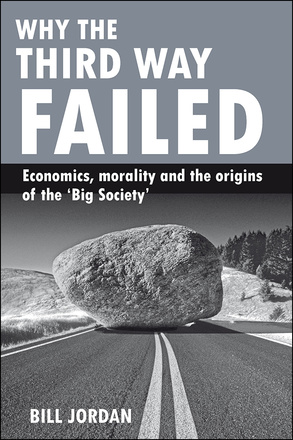
Why the Third Way failed
By
Bill Jordan
Didn’t find what you were after?
Search again
Search results for "9781847426567"